
When roof load actually matters
A dusting of fresh powder isn't a structural concern. The problem builds when several storms stack on top of each other without a real melt in between, especially when a heavy, wet system rolls through Spokane, which happens most often in late fall and early spring when temperatures hover right around freezing. Wet snow can weigh several times more per inch than the light, dry powder from a cold-front storm, so a foot of wet, compacted snow is a very different load than a foot of fresh powder, even though the ruler reads the same. Layered storms make this worse: fresh snow on top of older, compacted snow or ice adds weight the roof is already carrying, not fresh weight on a clean surface.
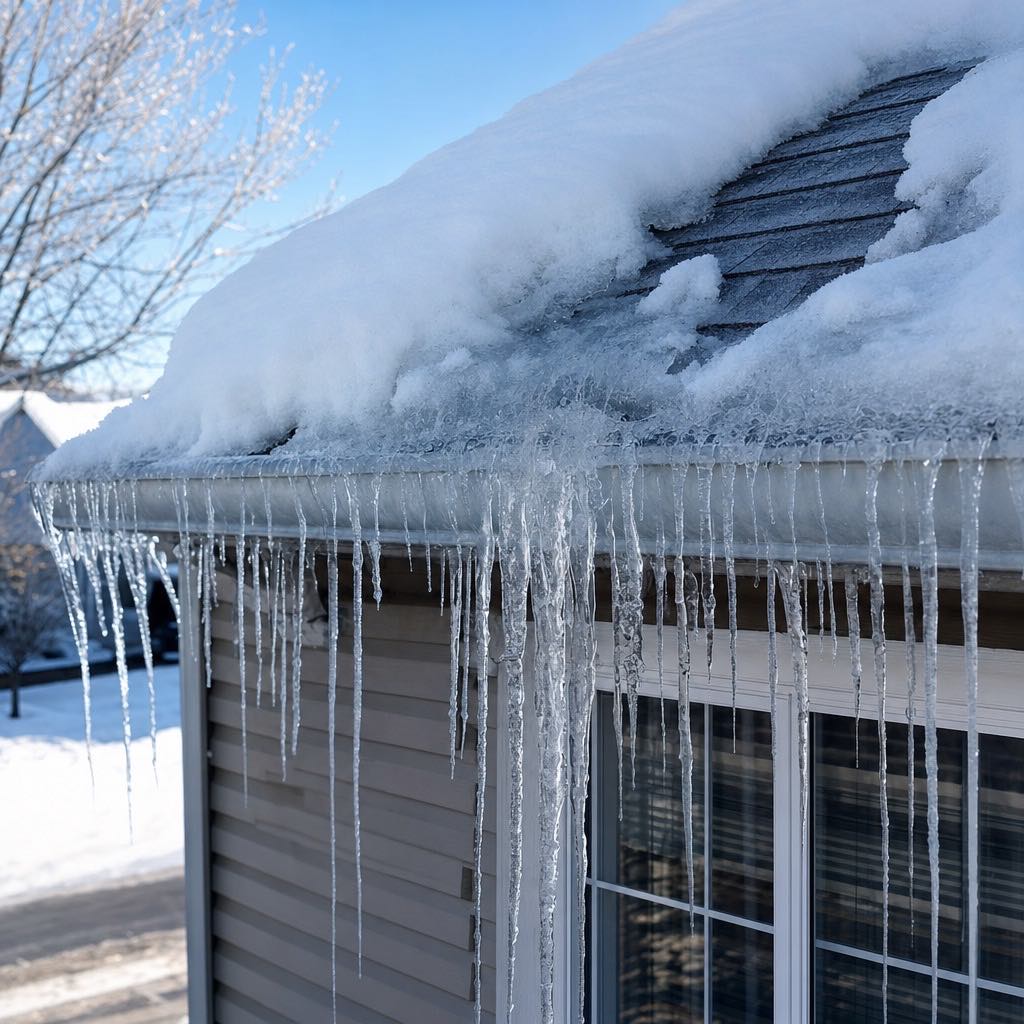
How ice dams form
Ice dams start with heat, not weather. Warm air escaping from a living space rises into the attic and warms the underside of the roof deck near the ridge, which melts the bottom layer of snow sitting on the warmer part of the roof. That meltwater runs down toward the eaves, which stay colder because they overhang unheated space, and refreezes there into a ridge of ice. Once that ridge forms, more meltwater from above has nowhere to go and can back up under the shingles, which is how water ends up inside a house that never had an actual leak in the roofing material itself.
Attic insulation and ventilation are the real prevention tools here. A well-insulated, well-ventilated attic keeps the roof deck closer to outdoor temperature, so snow melts evenly (or doesn't melt at all) instead of melting unevenly near the warm ridge and refreezing at the cold eaves.
Safe removal methods
Roof rakes, used from the ground, are the primary tool for fresh snow on single-story and easily-reached sections of roof. They pull snow off the lower few feet of roofline without anyone leaving the ground, which handles the areas most prone to ice dam formation and heavy eave load. For ice dams and compacted ice that a rake can't touch, steam removal melts the ice directly without the mechanical impact that can crack or lift shingles. Chipping, hacking, or using anything sharp on ice is the fastest way to puncture roofing material and turn a snow problem into a leak problem. Contractors doing this work should not use those methods.
Warning signs worth acting on
A roof under real stress usually gives some notice before anything catastrophic happens. Interior doors that suddenly stick or won't latch right can mean the frame has shifted slightly under roof load. New cracks in ceiling drywall, visible sagging along a roofline, or creaking sounds during heavy snow are all signs to get someone out rather than wait for the next storm to add more weight. Water stains spreading across a ceiling usually point to an ice dam that's already backed water under the shingles, which needs attention alongside whatever snow is still sitting up there.
Older roofs and flat or low-slope sections
Age and roof pitch both change how much margin a structure has. An older roof, or one that's already carrying wear from previous winters, generally has less reserve capacity than a newer roof built to current code, even if the visible snow load looks the same from the ground. Flat and low-slope sections, common on additions, garages, and porch roofs, don't shed snow the way a steep pitch does, so they tend to accumulate the heaviest loads on a property and are usually the first spots worth checking after a run of storms, well before the main roofline shows any obvious stress or sag becomes visible from the yard.
Roof snow removal questions
How much snow on a roof is too much?
There's no single depth that applies to every roof, since load capacity depends on roof age, structure, pitch, and snow type. Heavy wet snow weighs far more per inch than dry powder, and layered storms piling fresh snow on existing ice add up faster than total depth alone suggests. Watch your roof's condition, not just the ruler.
What causes ice dams?
Ice dams form when heat escaping from inside the house melts snow on the upper roof, that water runs down to the colder eaves and refreezes, and the resulting ice ridge blocks further meltwater from draining off, which can back it up under shingles. Poor attic insulation and ventilation make the underlying heat loss worse and speed up dam formation.
Is it safe to remove roof snow myself?
Ground-based tools like a roof rake are reasonably safe for single-story homes with easy ground access, since you never leave the ground. Getting on the roof itself, or using anything sharp to chip at ice, carries real fall and roof-damage risk and isn't something we recommend doing yourself, especially on steep or icy pitches.
What warning signs mean a roof needs snow removal now?
Interior doors that suddenly stick, new cracks in ceiling drywall, visible roof sag, or creaking under snow load are all signs worth acting on rather than waiting out. Water stains spreading across a ceiling usually mean an ice dam has already backed water under the shingles and needs attention alongside the snow itself.
Do you use steam or just shovel roofs?
Both, depending on the situation. Roof rakes handle fresh snow from the ground; steam removal is used for ice dams and compacted ice that a rake can't touch, since it melts ice without the mechanical force that damages shingles. The work should not include chipping, hacking, or metal tools that can puncture roofing material.
Don't wait for a ceiling crack to call
Request free quotes and describe what you are seeing on your roof. A local provider may contact you about your request. Response time is up to that provider.